Is Switching to VoIP Worth It for Small Businesses? 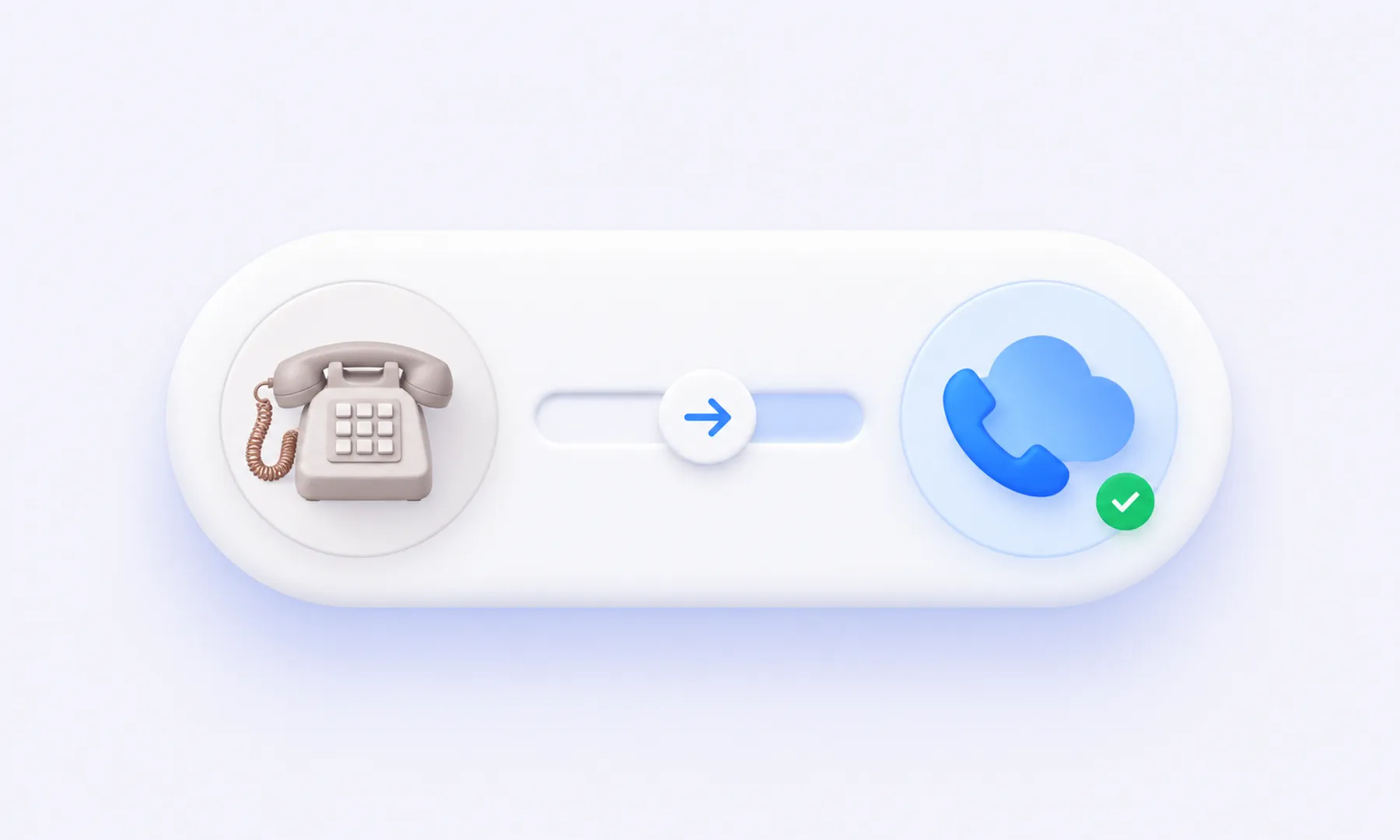
Many Australian small businesses are having to spend more on their telecommunications: as legacy copper landline infrastructure continues to disappear post-NBN rollout, the costs of maintaining traditional telephone lines are increasing. As a solution, many companies switch to VoIP systems, but is it worth it for small business operations?
Switching from a traditional telephone service to a cloud phone system for small business not only allows you to avoid rising copper line fees, but it’s also an opportunity to completely modernise how you and your team communicate.
What does VoIP actually cost a small business in Australia?
One of the biggest drivers of the mass migration to cloud-hosted systems is the reduction in upfront and ongoing costs. While traditional on-premise phone setups require high spending on phone bills and most of the changes involve additional costs on technician visits to program and update these systems, the cost of cloud VoIP phone systems is typically lower and more stable as many of the technical adjustments are free of charge or cheaper than with a regular telephone service.
A typical entry-level cloud phone setup costs between $25 to $35 per user per month all-inclusive. This price generally bundles your user and device subscription and unlimited local, national, and mobile calls within Australia.
If you want to switch to a cloud VoIP solution, apart from the monthly fees, there are some setup costs:
- Hardware: if you prefer your team to work on physical desk phones, IP-enabled hardware (like Yealink or Polycom units) starts at around $80 per phone. However, many modern businesses completely bypass this cost by using software-based applications on existing computers and smartphones.
- Number Porting Fees: Moving your existing phone number over to a new carrier involves a once-off porting charge of about $22 for a simple single line or a mobile number and $110 for a complex port, which is usually a block of numbers.
Even though porting multiple numbers to a VoIP provider and purchasing new hardware has costs, the reduction in recurring monthly costs is significant, and it quickly pays off:
| Cost Component | Keeping Traditional On-Premise Landline | Moving to a cloud phone system (e.g., VoIPLine) |
| Upfront Hardware | $0 | $0 (If using apps) to $80+ per physical IP phone |
| Monthly Fee Per Line/User | $40 - $70+ plus call costs | $25 - $35 (Often includes unlimited calls) |
| Maintenance & Support | Expensive technician fees | Usually included in the monthly cloud subscription |
| Line Relocation / Scaling | High fees and days of waiting per line | $0 and instant deployment via an online portal |
| Porting fees | $0 | $22 per simple line port or $110 per complex port |
The pros of switching to VoIP
If you are considering moving your communication to a cloud phone system, the advantages include both spend reduction and more efficient communication for your business:
- Cost Savings: most Australian businesses experience about 50-70% reduction in call costs and line rental fees compared to legacy landlines.
- More Available Features even on a Small Business Budget: historically, complex feature-rich communication systems could only be maintained by expensive corporate hardware, but cloud VoIP solutions give small teams an opportunity to configure a multifunctional and efficient call flow with different features and integrated services like auto-attendants (virtual receptionists), automated call recording, voicemail-to-email routing, CRM, etc. Some VoIP providers have more advanced tools, for example VoIPline offers call analytics, MS Teams integration and many other useful additions to your phone system.
- Instant Scalability: if you need to add a new team member, you can just make a few quick changes in the online portal instead of scheduling a technician visit to wire a physical phone line into your office.
- Flexibility: most of the changes to the way calls are routed can be done in a few minutes in the online portal too.
- Availability in Different Locations: your business phone line is no longer tied to a physical phone and the office building. Staff can answer corporate calls from home or other places; they only need a simple softphone app and an Internet connection. For example, the VoIPline WebPhone app can be used on a smartphone, PC or in a web browser.
The cons and limitations of VoIP
Despite the clear benefits, some limitations also need to be kept in mind when considering a switch to VoIP:
- Internet Dependency: VoIP phone system is entirely reliant on your Internet connection. To maintain good quality audio, you need a stable connection of at least 100 kbps per call. If there is an Internet outage, the calls will be disrupted; however, if you set up failover rules in advance, the incoming calls can be diverted to an external number or via Mobile Internet.
- Power Dependency: traditional copper landlines operate on their own low-voltage electrical current, meaning an office power cut wouldn't stop your desk phone from ringing. VoIP equipment, on the other hand, requires a working electricity supply. Though even if your IP phones will not work if there is a power outage, you can still use a softphone application on a smartphone or a laptop via Mobile network.
- Staff Learning Curve: switching from a simple "pick up and dial" telephone to a digital platform can temporarily frustrate team members. But because VoIP systems are commonly user-friendly, training staff on how to use them requires little onboarding time.
When is VoIP the right fit?
Cloud telephony can come in handy in a wide variety of everyday commercial scenarios. There are some of the cases when businesses can benefit from using VoIP systems:
- Remote and Hybrid Teams: if your staff members work from home, a cloud system keeps everyone under a single unified phone system, letting your employees access the same communication tool regardless of where they are located. For example, they can dial internal extensions for free or share the same Inbound number.
- Multi-Location Operations: a retail business with multiple offices across Australia can unify all their locations under the same VoIP account, allowing a single receptionist to answer and route calls nationally or set up a shared auto-attendant. Calls can be easily transferred between offices, and other data, such as call analytics, can be accessed across branches.
-
High Call Volumes: trade services, medical clinics or e-commerce brands can set up automated call queues, ring groups, IVR, custom hold music, and position announcements to manage heavy customer traffic efficiently.
- Separating Personal and Corporate Mobile Numbers: small business owners and employees can install a VoIP soft phone app on their personal smartphones to keep the personal and work calls separated. Also, if a corporate number is used as caller ID instead of a private number, it creates a more professional image for the business
- Growing Companies: businesses projecting significant team growth can scale their communications seamlessly without complex adjustments onsite.
When might VoIP not be the right choice?
While cloud communication is a really good option for the vast majority of businesses, some companies may not benefit from the change that much:
- Genuinely Poor Internet Connectivity: if your business operates in a remote or rural area where NBN connection is unstable, and it suffers from high latency and frequent drops, VoIP solutions will not work reliably. In such a case, existing landlines remain a safer choice for critical operations.
- Businesses with Close to Zero Call Volume: If you run a business that conducts 99% of its client communication via email, a text messenger app, or face-to-face meetings, the effort to configure a complex cloud system might not be justified. However, even in this scenario, "pay-as-you-go" VoIP plans usually still cost less per month than keeping an old landline active.
How to switch to VoIP without disrupting your business
Migrating your business communications to the cloud system doesn't mean you need to pause the work processes. The transition usually takes roughly 1-2 weeks, and most of the time your phone numbers will be operational. The required steps to switch to VoIP include:
- Choose a Provider & Plan: select an Australian provider that fits your required call volumes and feature/integration needs.
- Submit Number Porting Requests: provide your current carrier account details to your new provider so they can initiate the transfer of your existing numbers. Under the Australian Communications and Media Authority (ACMA) Numbering Plan, you retain a strict legal right to keep your local phone numbers when changing providers, no matter whether it's VoIP or not.
- Configure Your Call Flow: While your numbers are porting, log into your new account to build your custom call flow and configure SIP devices.
- Test the System Internally to check that everything works the way you need.
- Go Live: Once the porting date arrives, your old lines will automatically stop receiving calls, and your incoming traffic will now be routed to your newly configured cloud platform.
Frequently asked questions
Is VoIP worth it for a 1-person business?
Yes. Aside from saving money compared to a standard business landline, it allows a sole trader to separate personal and work numbers and establish a more professional presence.
What internet speed do I need for VoIP?
VoIP requires very little raw bandwidth - only about 100 kbps per one concurrent call. A standard entry-tier NBN 25/5 Mbps plan can easily handle 5+ simultaneous phone calls alongside normal web browsing.
Can I keep my landline number?
Absolutely. As per ACMA regulations, you can port any existing Australian landline, mobile or 1300/1800 number over to a cloud network.
How long does setup take?
Setting up the actual call flow - creating users, routing rules, downloading software apps and configuring devices - takes a few minutes to an hour depending on how complex you would like your system to be. However, the complete process of porting your existing telephone numbers from your old carrier usually takes from a couple of days to a few weeks, depending on complexity
Can I set up my call flow before porting my number?
Yes, you can configure the call flow in advance before porting the number in to decrease the downtime for your Inbound number to a couple of hours.
What if the internet goes down?
If your office Internet connection drops, your phone system will still be operational because your call flow is stored in the cloud and it will execute your pre-configured failover rules instantly, automatically diverting incoming calls to external numbers or voicemail. It is recommended to have a backup internet connection such as Mobile Internet to help you maintain standard operations.